Chilly but sunny, no breeze this afternoon for a walk in the ravine at the end of our block. The skunk cabbages are in bloom -- this one has leaves beginning to unfurl.

Here are my new socks from Zkano, made in Alabama. Not only do they have great designs, but the socks are very comfortable (nonbinding tops that stay up).
On Thursday I enjoyed the luncheon meeting of the Clara Cummings Book Club. The entertainment was a reenactor portraying Princess Diana. She cleverly began, "You know I am dead, of course," so we the audience knew that she knew what was coming. It was very entertaining. It was also great to see friends from AAUW, GFWC, and P.E.O. among the 30 or so who attended.


 The color scheme for the bird houses mimics the colors in the convention logo (turquoise, coral, some red/blue/yellow).

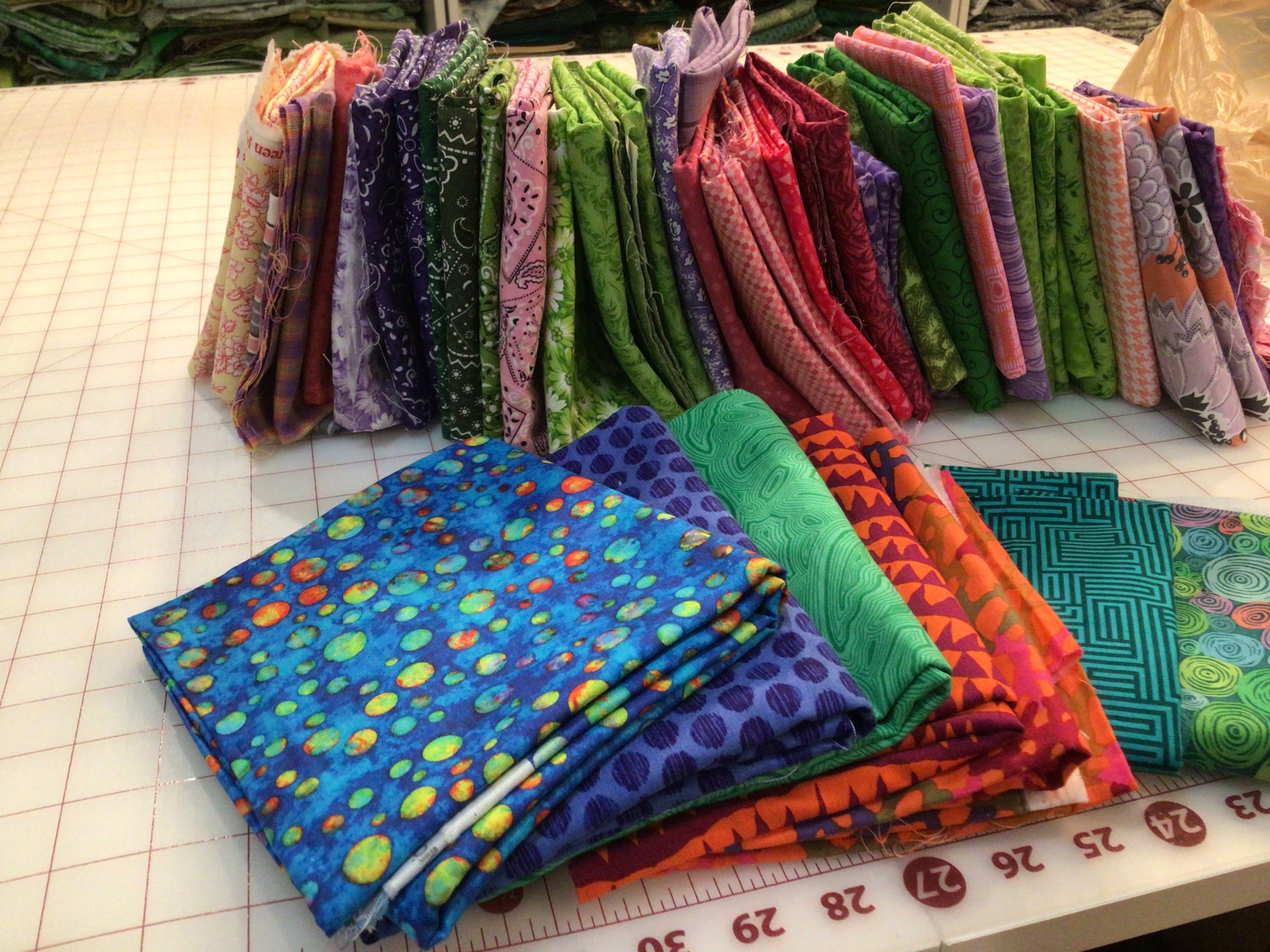
I have been SO good about not buying fabric that this indulgence at Quiltagious was not all that bad. Just 12-3/8! (The last 1/8 was to finish a bolt.)
 Can you guess which print will become the sashing?

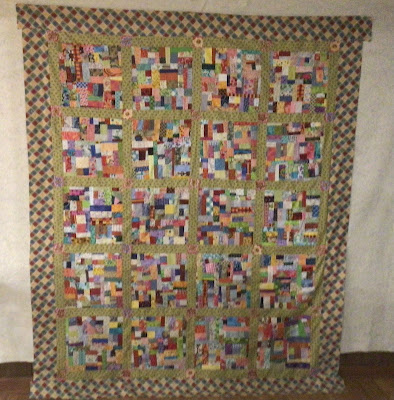
The unexpected occurred the evenings between my re-design and the trip to Quiltagious. I pulled out the bin of random scraps and started piecing crumbs. One thing led to another and then to many more.
I had to cut more strips and squares to get variety. (Since I cut most scraps into specific sizes my random bin isn't very large.)
It's 80 x 56, 5 yards. I'm calling it Creme de la Crumb. (That's not grammatical but it is alliterative.)
# # # # # #
The Last Bookshop in London is the April selection for an online book group I'm in.
A plucky young woman discovers her inner resources and life's passion in London during the Blitz. The description of living under siege was particularly timely with the current Russian attack on Ukraine.
The story would be enhanced with an author's note about her research and the inspiration for the story.

The historic houses that are featured on tours, written about in books and magazines, and are exemplars of architectural styes are primarily the houses of the wealthy and the upper middle class.
Architectural historian Thomas Hubka writes about the houses that people of lesser means lived in -- most likely many of our forebears. American cities and towns still have hundreds of those houses. Hubka traces development from two rooms (kitchen/eating/living and one bedroom) to four or five rooms and the three-fixture bathroom. I've lived in a number of the house styles he describes (bungalow in Pittsburg, KS: side-hall in Portland, ME; side-gable in Auburn, ME; four-box-with bath in Fargo). I now understand why my mother insisted on having a dining room (a step up from eating-in-the-kitchn) and why there was a lone toilet (in an enclosure) in the cellar in our c1900 Portland house. Zion has many of the small-to-large houses that Hubka talks about. I learned a lot from this enjoyable and very readable history.
~~~~~~~
Linking up with Oh Scrap! Monday Making Design Wall Monday